
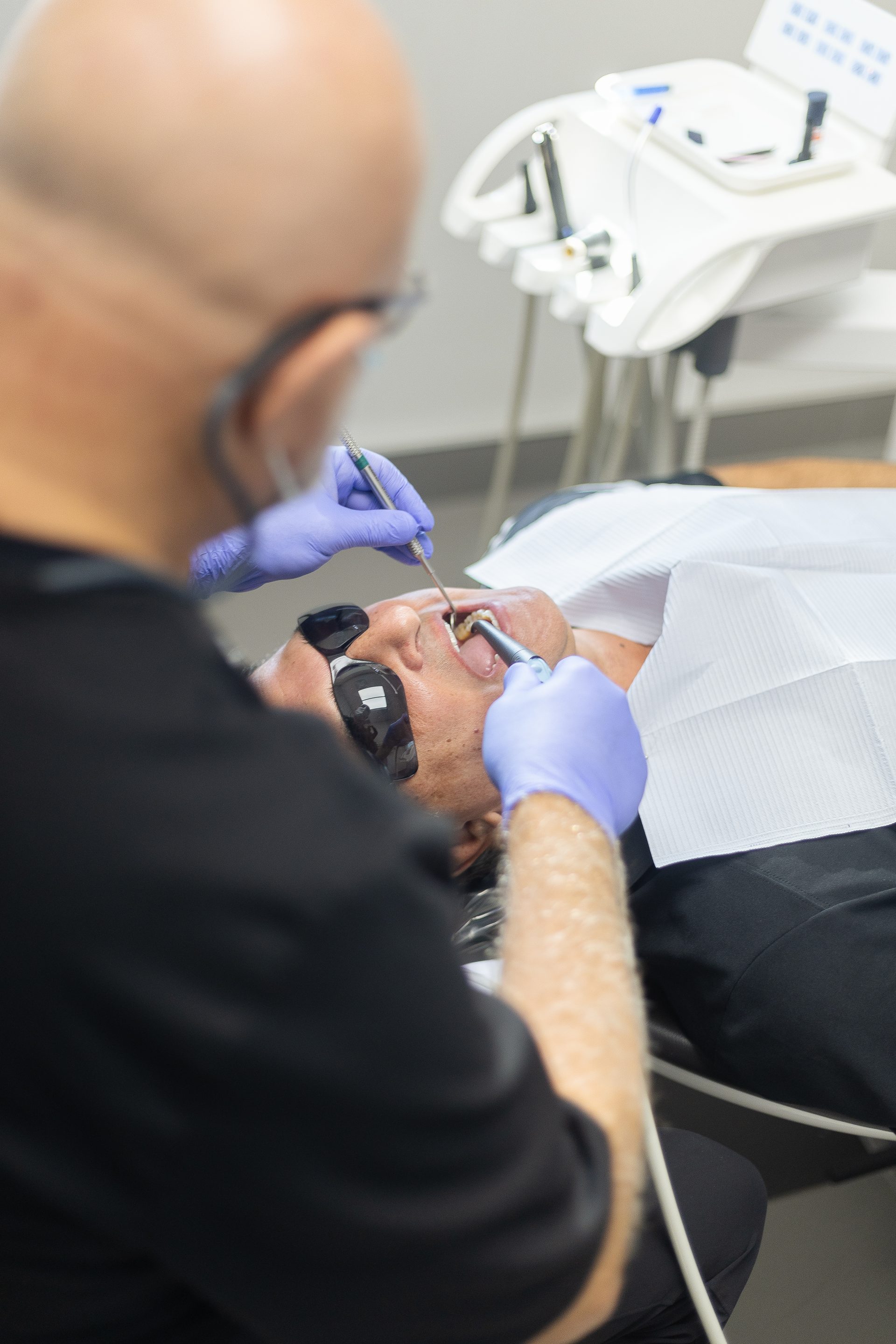
Dental Sealants: What They Do and Who May Benefit
The grooves on the chewing surfaces of molars can be difficult to clean thoroughly, particularly for children who are still developing brushing skills. Dental sealants are a preventive option designed to cover those deep grooves and reduce the places where food debris and plaque can collect.
For Stoney Creek patients and parents considering dental sealants, it helps to understand what they are, when they may be considered, and why brushing and regular dental care still matter.
The dentists at Skyview Dentistry are general practitioners, and recommendations are based on each patient's individual needs.
What are dental sealants?
Dental sealants are thin protective coatings placed on the chewing surfaces of back teeth, most often molars and premolars. These teeth have small pits and grooves that can be narrower than toothbrush bristles, making them more challenging to clean consistently.
The purpose of a sealant is preventive: it creates a smoother barrier over selected grooves, helping limit the accumulation of plaque and food particles in those areas. A sealant does not repair existing tooth decay or replace a filling; whether a tooth is suitable depends on its condition during a dental assessment.
Learn more about Dental Hygiene at Skyview Dentistry.
Who may benefit from sealants?
Sealants are often discussed for children after permanent molars come in, because these teeth can be vulnerable while daily brushing habits are still developing. However, age alone does not determine whether sealants are appropriate.
Some teens and adults may also have deep, decay-free grooves in their back teeth that could be considered for sealants. A dental professional can examine the tooth surfaces, review relevant oral-health factors, and determine whether preventive sealants or another approach makes sense.
What happens when a sealant is placed?
In general, placing a sealant involves preparing and drying the chewing surface before the coating is applied and allowed to set. The exact steps can vary with the material used and the tooth being treated.
Sealants are intended to support, not replace, daily oral hygiene. Brushing twice daily with fluoride toothpaste, cleaning between teeth where appropriate, and limiting frequent sugary snacks or drinks remain important for reducing the risk of tooth decay.
How long do dental sealants last?
Sealants can wear or chip over time, especially because molars absorb substantial chewing forces. Their condition can be checked during regular dental visits, and a clinician can advise if a sealant needs attention or replacement.
A sealant should not be assumed to provide lifelong protection. Keeping up with home care and routine examinations helps identify changes in sealants, tooth surfaces, and gum health early.
Questions to ask about sealants in Stoney Creek
If you are considering sealants for yourself or your child, useful questions include which teeth may benefit, whether there are signs of existing decay, and how sealants fit into an overall prevention plan. It is also reasonable to ask how the surfaces will be monitored over time.
Dental sealants are listed as part of the Dental Hygiene services at Skyview Dentistry. The dentists at Skyview Dentistry are general practitioners. An examination can help determine whether sealants are appropriate for a particular tooth.
Key Takeaways
- Dental sealants are protective coatings placed on the chewing surfaces of selected back teeth.
- They are commonly considered for children’s newly erupted permanent molars, but some teens and adults may also benefit.
- Sealants do not replace brushing, fluoride toothpaste, cleaning between teeth, or regular dental care.
- A dental assessment is needed to determine whether a tooth is suitable for a sealant and to check the condition of existing sealants.
Frequently Asked Questions
Are dental sealants only for children?
No. Sealants are frequently considered for children, especially when permanent molars erupt, but some teens and adults may have suitable decay-free grooves on back teeth. Suitability depends on the individual tooth and a dental assessment.
Can sealants be placed on a tooth with a cavity?
Sealants are generally a preventive measure for selected tooth surfaces. If decay is present or suspected, the tooth needs to be assessed so the appropriate treatment can be discussed.
Do sealants replace brushing?
No. Sealants protect selected chewing grooves, but all tooth surfaces and the gums still need daily care. Brushing with fluoride toothpaste and cleaning between teeth remain important.
How are sealants checked after they are placed?
A dental professional can examine sealants during regular visits to see whether they remain intact and whether the surrounding tooth surface is healthy. Advice about replacement depends on the condition of the sealant and tooth.