
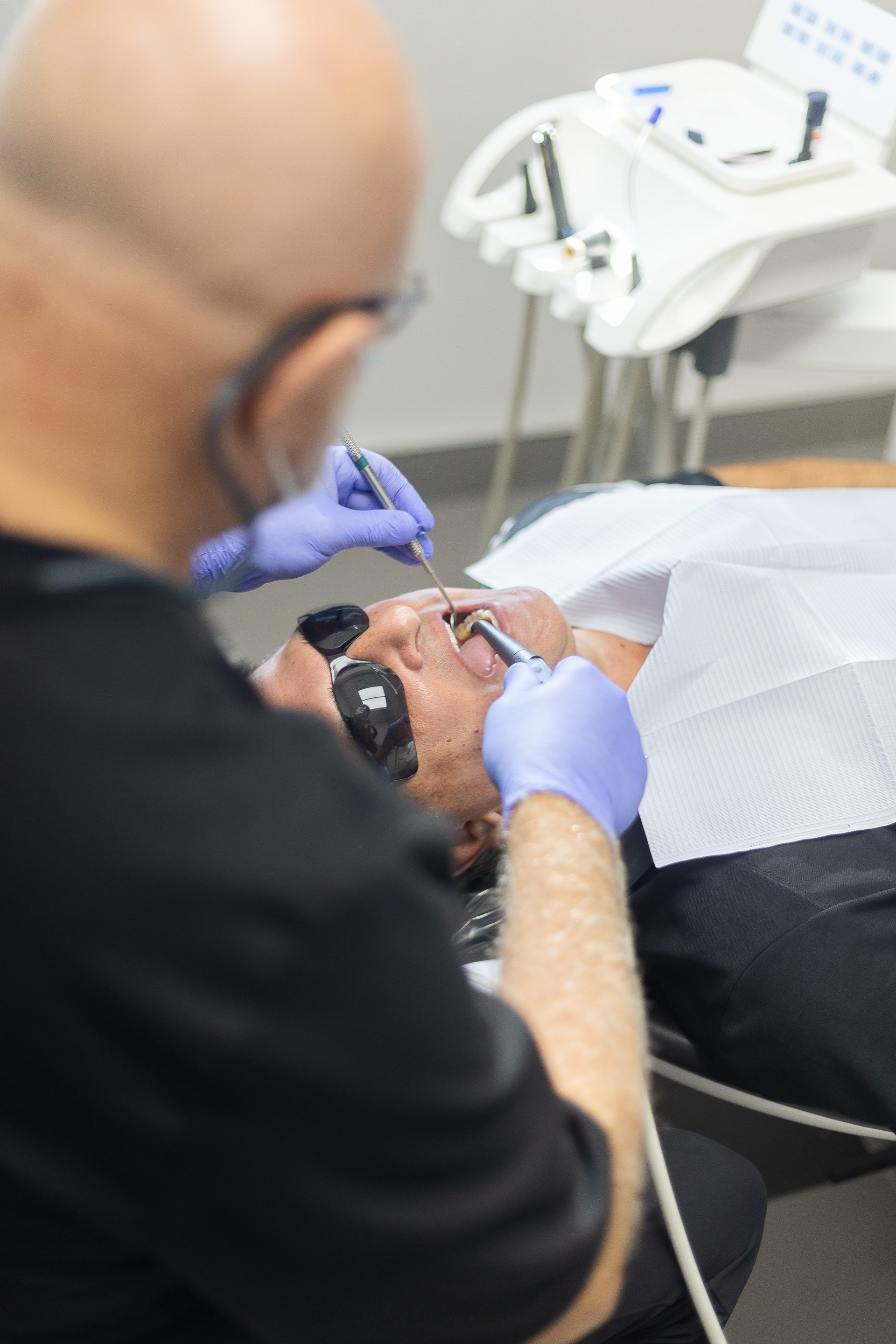
Why Dental Cleanings Matter Even If You Brush and Floss
Brushing twice a day and cleaning between teeth are important parts of caring for your mouth at home. Even with consistent habits, though, some plaque can remain in areas that are difficult to reach or clean thoroughly.
Professional dental cleanings are designed to complement—not replace—daily home care. Understanding the difference between plaque and tartar can help explain why a cleaning may still be recommended as part of an individual oral-health plan.
The dentists at Skyview Dentistry are general practitioners, and recommendations are based on each patient's individual needs.
Plaque can collect in hard-to-reach places
Plaque is a soft, sticky film of bacteria that forms on teeth throughout the day. It can build up along the gumline, between teeth, and around the back teeth, where brushing angles and flossing technique can make a difference.
Daily brushing and cleaning between teeth help disrupt plaque before it accumulates. However, it is common to miss small areas, particularly when teeth are crowded, dental work creates edges that are harder to clean around, or a person’s brushing routine has changed.
Learn more about Dental Hygiene at Skyview Dentistry.
Tartar is different from plaque
When plaque is not removed, minerals in saliva can cause it to harden into tartar, also called calculus. Tartar can form above or below the gumline and generally cannot be removed with an ordinary toothbrush or floss.
The presence and rate of tartar buildup vary from person to person. Saliva, oral hygiene habits, tooth position, diet and other factors can all play a role. A dental professional can identify buildup and discuss what it may mean for a person’s home-care routine.
A professional cleaning supports home care
A professional cleaning can remove plaque and tartar from tooth surfaces, including areas that may be difficult to reach at home. This helps reduce the material that bacteria can collect on around the teeth and gums.
A cleaning appointment can also be an opportunity to review brushing and interdental-cleaning techniques. The best approach depends on the individual’s mouth, including the spaces between their teeth and any restorations or appliances they may have.
There is no single cleaning schedule for everyone
The timing of dental cleanings should be based on an individual assessment and oral-health needs. Some people may be advised to attend more often than others because their risk factors, gum health, tartar accumulation or ability to clean certain areas differ.
Rather than choosing an interval based only on a general rule, ask what schedule is appropriate for you and why. If you notice bleeding when brushing, ongoing bad breath, gum tenderness, visible buildup or a change in your mouth, it is reasonable to arrange a dental assessment. These signs can have different causes and should not be self-diagnosed.
Questions to bring to a dental hygiene visit
Useful questions include whether there are areas you are routinely missing, which interdental-cleaning method may suit the spaces between your teeth, and whether your toothbrush technique needs adjustment. If you have sensitivity, ask how to keep your home routine comfortable without avoiding the affected area.
Skyview Dentistry lists preventative professional cleaning as part of its Dental Hygiene services in Stoney Creek. An appointment can help you discuss your own oral hygiene needs and the role professional cleaning may play in your care.
Key Takeaways
- Brushing and cleaning between teeth are essential daily habits, but they may not remove every deposit from hard-to-reach areas.
- Plaque is soft and can be disrupted at home; tartar is hardened buildup that generally requires professional removal.
- Professional cleanings are intended to support—not replace—consistent home oral hygiene.
- The right interval for dental cleanings depends on an individual assessment, oral health and risk factors.
Frequently Asked Questions
Why do I need a dental cleaning if I brush and floss every day?
Brushing and cleaning between teeth help remove plaque each day, but small areas can still be missed. Plaque can harden into tartar over time, and tartar generally cannot be removed with home-care tools.
Can I remove tartar at home?
Tartar is hardened buildup that generally requires professional removal. Avoid trying to scrape deposits from your teeth with sharp or improvised tools, as this may injure your gums or damage tooth surfaces.
How often should I have a professional dental cleaning?
There is no single schedule that suits everyone. The appropriate timing depends on your oral health, gum condition, tartar buildup and other individual factors, so ask a dental professional for guidance based on an assessment.
Does bleeding when I brush mean I should stop brushing that area?
Do not assume bleeding has one cause or simply avoid the area. Gentle, thorough cleaning remains important, but bleeding, tenderness or other changes should be discussed with a dental professional so the cause can be assessed.